
LUCCA, ITALY: THE ULTIMATE TRAVEL GUIDE
Lucca might not be as famous as glamorous neighbors Florence and Siena, but it’s a destination worth including on a road trip through Tuscany. Affectionately called the City of 100 Churches, Lucca is an architectural marvel that sits inside a ring of Renaissance walls made from brick, stone and clay. The historic center has been surrounded by looming fortification walls since it was first built, protected by four different sets of walls over different periods – Roman, Medieval and Renaissance. It’s home to picturesque lanes, an amazing central piazza and it feels like there is an old church around every corner of the historical center. Below is my complete travel guide to Lucca including my favorite historical sights, churches, piazzas, osterias, hotels, travel tips and more.
This post contains affiliate links. When you click these links I may get a small commission that won’t cost you anything, but it does help me run this website.
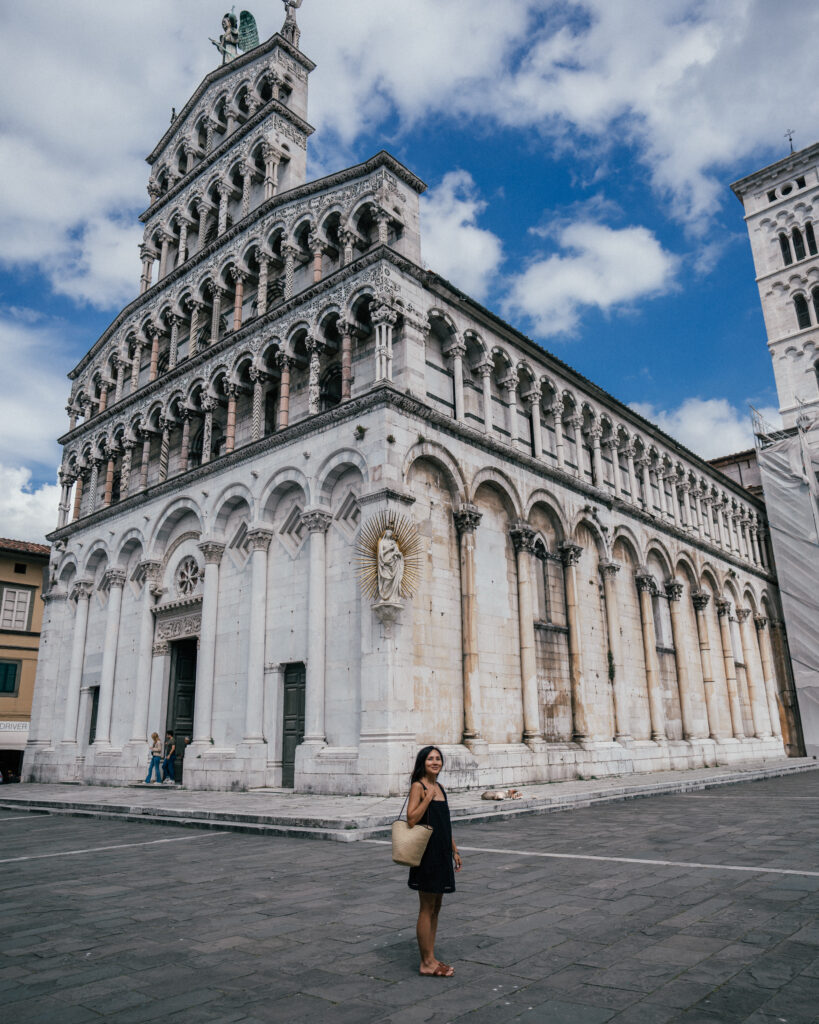
In the City of 100 Churches, San Michele in Foro stands out as the most beautiful. OUTFIT DETAILS: Sezane dress linked here and bag linked here.
LUCCA TRAVEL TIPS
- CURRENCY – The official currency of Italy is the euro. While most places take credit card, it’s always handy to have cash for smaller purchases, etc.
- TIPPING – Tipping is not customary in Italy, servers are paid living wages.
- STAY CONNECTED – Most hotels and most restaurants have free wifi, but for 24/7 connection I recommend purchasing an eSIM before flying to Italy. I use Holafly – it’s affordable, and only takes a few seconds to install. The eSIM plans for Italy are linked here (use code BUCKETLISTBUMS for 5% off).


The oval shaped Piazza dell’Anfiteatro is one of my favorites in Italy. OUTFIT DETAILS: Sezane bag linked here.
HOW MANY DAYS IN LUCCA
One full day is enough time to explore Lucca on foot, cover most of the main historical sights and sit down for a couple of stellar meals. It’s a very easy city to visit as a day trip, but if you opt to stay longer, it’s also a great base for day trips around Tuscany.
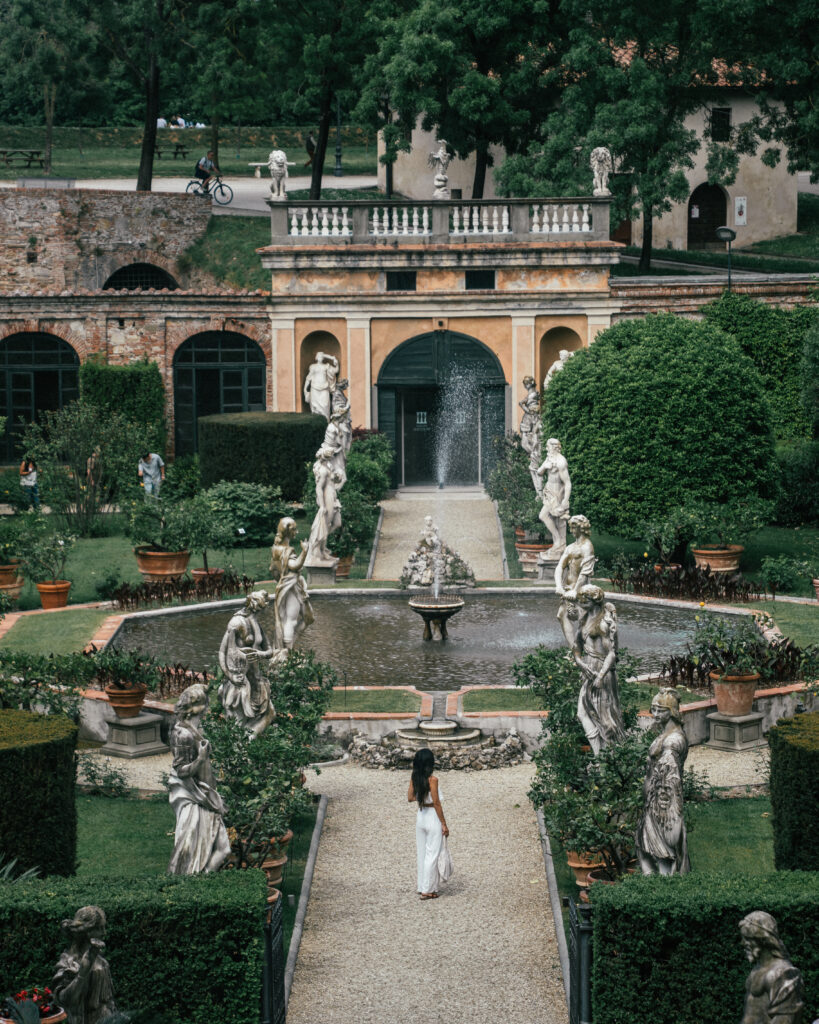
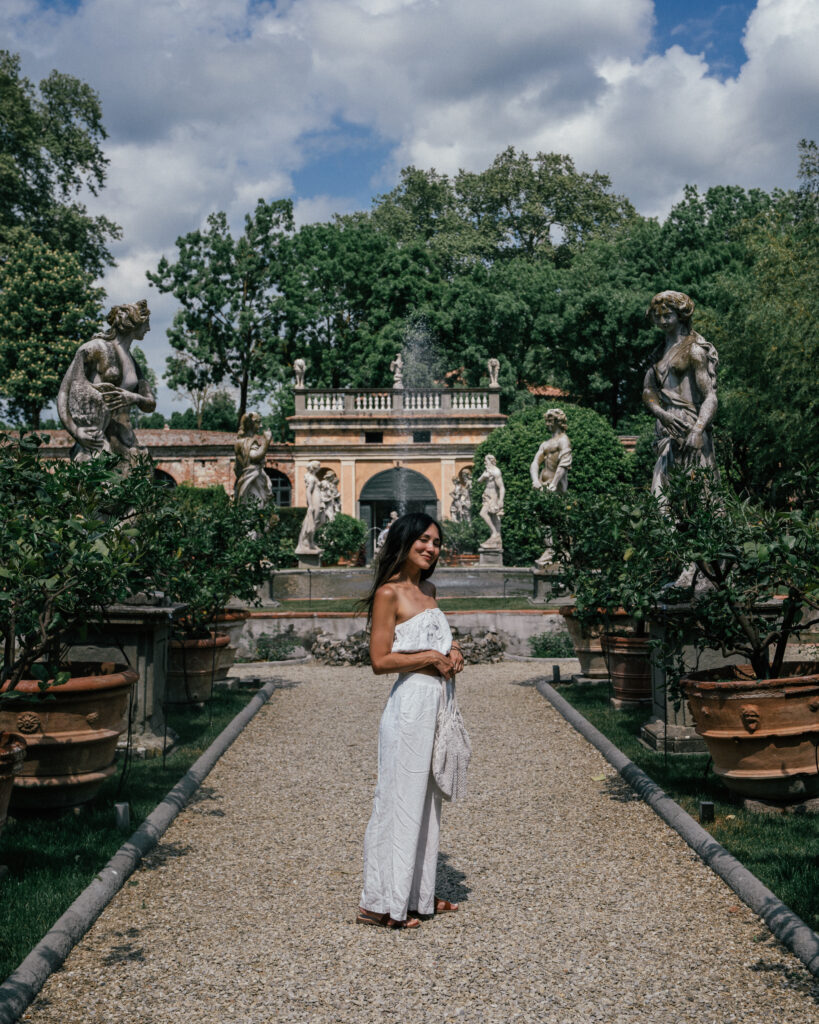
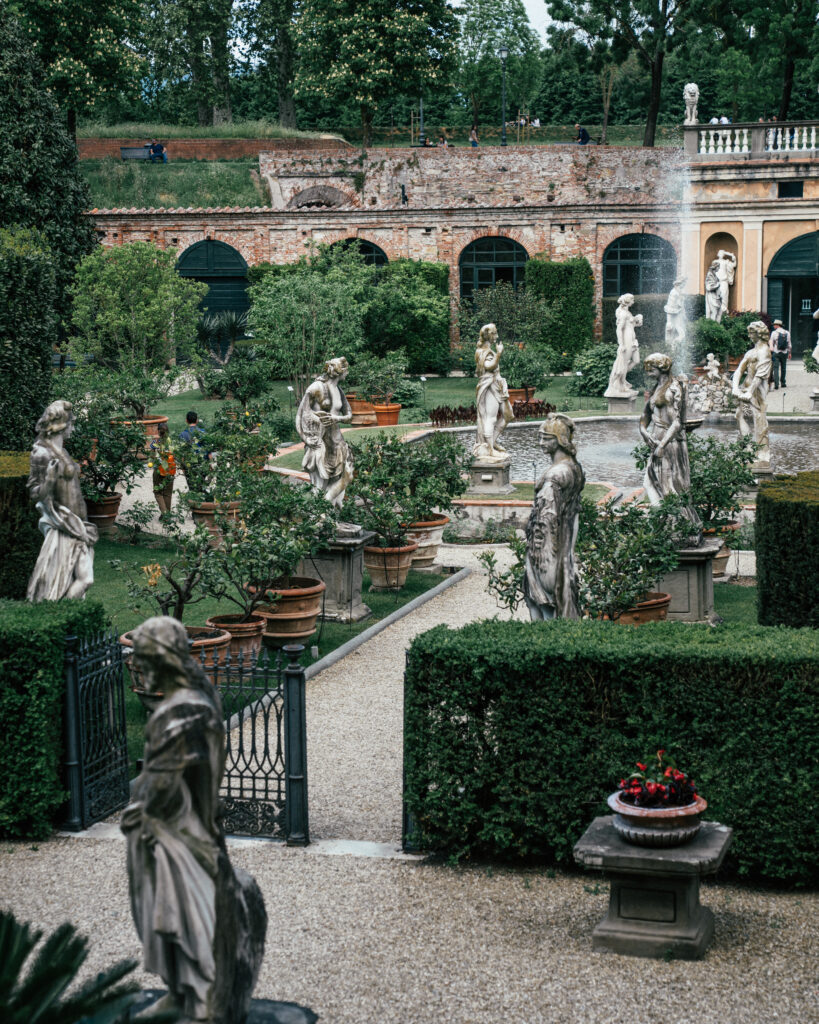
Palazzo Pfanner is a gorgeous 17th century palace and garden.
WHEN TO VISIT LUCCA
- APRIL, MAY, SEPTEMBER, OCTOBER – Shoulder season is the best time of the year in Tuscany. Crowds can’t be avoided, but it won’t be as busy as summer, temperatures are more manageable and hotel prices are a bit more reasonable.
- JUNE-AUGUST – Summer is the busiest time of the year throughout Italy. Make all reservations well in advance.
- NOVEMBER-MARCH – Hotel prices are more affordable in low season when crowds thin out, but you risk cooler weather.

Piazza San Michele.
PLACES TO VISIT IN LUCCA
BASILICA DI SAN FREDIANO
Basilica di San Frediano is one of the oldest Catholic churches in Lucca. A church was first built on this site in the 6th century, but the existing church dates back to the 12th century. The Romanesque facade that towers above the entrance features a striking golden mosaic. Visitors can climb the 52-meter tall bell tower that sits behind the church, an alternative to the Guinigi Tower.
CHURCH OF SAN MICHELE IN FORO
Of the dozens of churches scattered throughout Lucca, the stunning San Michele in Foro is the most exquisite. The bright white limestone of the Romanesque basilica is an architectural marvel of tiered columns, ornate archways and marble statues that anchors the bustling Piazza San Michele. A must-visit in Lucca.
DUOMO DI SAN MARTINO
Tucked into the southern historic center of Lucca, the Duomo di San Martino stands out for its delightfully irregular marble facade. The asymmetry was actually a historical accident: an existing brick bell tower already occupied the square, leaving the architect with no choice but to squeeze the right side of the facade into the remaining gap. This whimsical lack of uniform design carries into the upper galleries, where every decorative marble column features its own unique carvings.
PALAZZO PFANNER
Tucked away at the northern edge of the historic center, the 17th century Palazzo Pfanner boasts an absolutely gorgeous Baroque garden designed by royal architect Filippo Juvarra. A stroll through the grounds, famed for perfectly manicured hedges, trickling fountains and striking marble statues of Greek gods lining the entrance, is an absolute highlight of any visit to Lucca. The palazzo’s cinematic, Old World elegance is so distinct that it served as a filming location for the 1996 film The Portrait of a Lady. While most travelers experience the palazzo via a standard admission ticket, you can actually book a rare, overnight stay in a beautifully restored apartment right inside the palace walls on Airbnb here.
PIAZZA DELL’ANFITEATRO
Piazza dell’Anfiteatro is one of the most treasured gems in Lucca. Constructed in the early 19th century, the unique public square is the shape of an oval, built directly on top of the ruins of a Roman amphitheater. A ring of yellow buildings with green shutters and terracotta tiled rooftops surround the vibrant piazza filled with bars, cafes, restaurants and shops. It’s a great place to grab a drink or dinner and people watch.
TORRE GUINIGI TOWER
It takes 200+ steps to reach the top of this 14th century red brick tower for a sweeping panorama of Lucca’s historical center. A unique sky garden sits at the top of the tower, literally a rooftop hanging garden comprised of seven ancient oak trees.
MURA DI LUCA
The Mura di Luca is a four-kilometer loop around the Old Town walls that takes about an hour to complete on foot (or quicker on bicycle). Once used for military defense, the walls were completely transformed into public tree-lined park spaces in the 19th century. It’s a popular route for both tourists and locals to jog, walk and bicycle.
PIAZZA NAPOLEONE
As the largest square in Lucca, the sprawling, tree-lined Piazza Napoleone serves as the vibrant heart of the city. Flanked by imposing government palazzos, this lively public space features a charming, vintage carousel and frequently transforms into a venue for outdoor concerts and summer festivals.


Sottosotto was one of my favorite meals in Tuscany, and surprisingly located right on the Piazza dell’Anfiteatro.
BEST LUCCA HOTELS
While luxury hotel options are glaringly sparse, the Grand Universe stands out as one of the city’s few upscale retreats. Housed in a beautifully revived 18th-century palazzo, this Autograph Collection property offsets its compact room sizes with a sleek, moody and modern design. The real highlight, however, sits at the very top, where an intimate rooftop lounge offers gorgeous, sweeping views over the city’s sea of terracotta roofs.
Palazzo Dipinto is a small boutique hotel option also located in Lucca’s historical center. The space is clean and modern featuring centuries-old wood beams and exposed brick contrasted with pale oak floors, white walls and modern furniture pieces. The vibe is high-end Italian minimalism. There are 19 rooms and suites to choose from.

Exploring the picturesque alleyways of Lucca.
BEST PLACES TO EAT IN LUCCA
- BUCA DI SANT’ANTONIO – Italian
- DA GASTONE BOTTEGA TOSCANA – Sandwiches
- DANTE & GENTUCCA – Pizza
- FIASCHETTO – Sandwiches
- L’ANGOLO TONDO – Italian
- OSTERIA DA PASQUALE – Italian
- OSTERIA MIRANDA – Italian
- SOTTOSOTTO – Italian
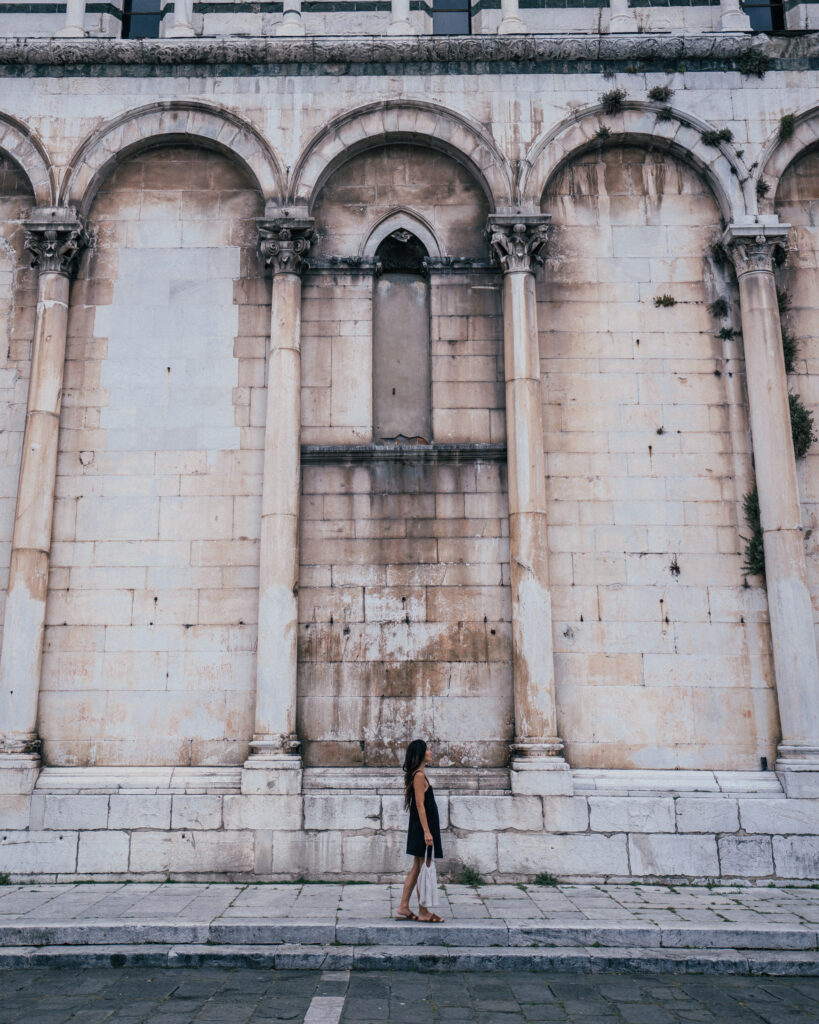

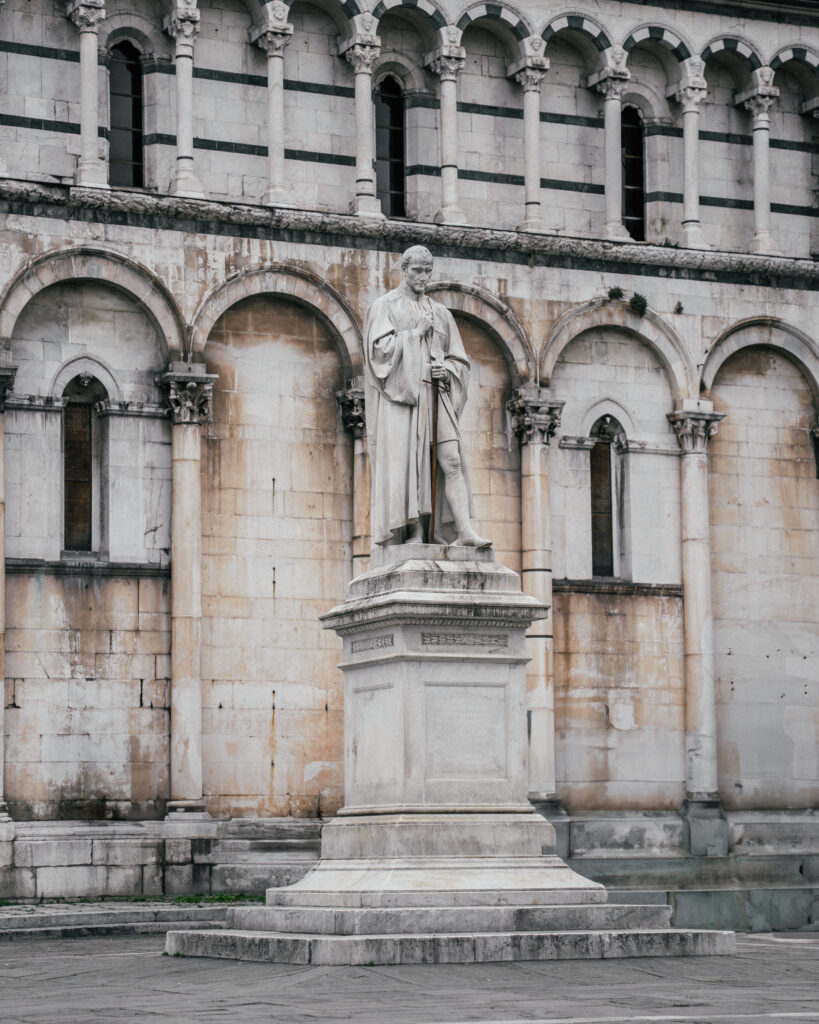
San Michele in Foro.
BEST GELATO IN LUCCA
- CREMERIA OPEA LUCCA SANT’ANNA
- GELATERIA PANIKO
- GELATERIA VENETA
- I GELATI DI PERO
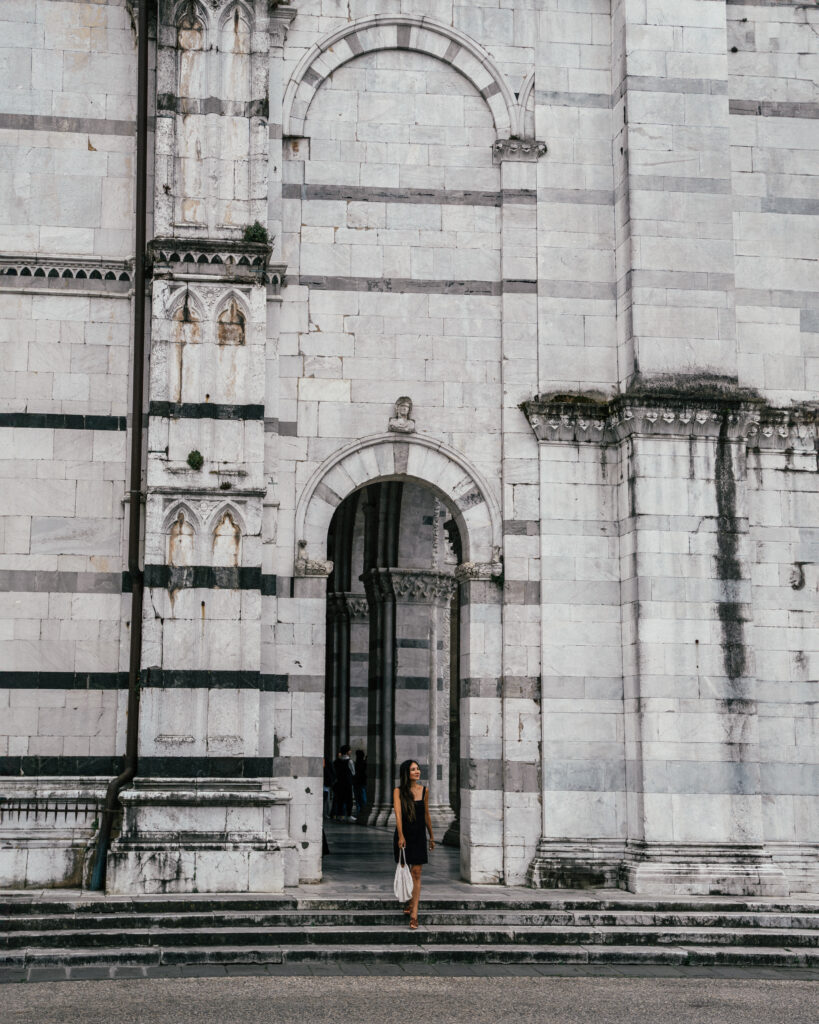
Lucca Duomo.
GET AROUND LUCCA
- BICYCLE – It’s a lot of fun to explore inside Lucca’s city walls on bicycle. There are rentals near the walls including the Tourist Center, Ride the Walls and Pro Classic Cycle.
- WALK – The historical center of Luca is a Zona a Traffico Limitato, an area that restricts most vehicles. Be prepared to explore on foot and get lost in the maze of alleyways and cobbled streets.

Inside the beautiful Palazzo Pfanner.
GET TO LUCCA
- CAR – Lucca is easy to reach by car as a day trip in Tuscany. There are several paid parking lots located around the historic center including Parcheggio di Via del Pallone, Parcheggio Cittadella, Parcheggio Carducci, Parcheggio Stazione and Parcheggio Lorenzini. If you opt for street parking, look for the blue lines – they indicate paid street parking.
- FLIGHT – The Pisa International Airport (PSA) is the closest airport to fly into located 30 minutes away by car.
- TRAIN – Stazione di Lucca is the main train station in Lucca. It’s located outside the city walls.


Aperol Spritz on my favorite piazza in Lucca.